World Cup 2026: The Finger Food Worth Staying In For
12th June 2026

The best food to make for the World Cup is food you can eat with one hand. No plates, no cutlery, and ideally no washing up. Think Thai pork meatballs & peanut sauce, chicken yakitori, Colombian-inspired empanadas & salsas, and a variety of pop-in-your-mouth sushi rolls. Just some of the dishes reflected by the nations playing in this year's tournament.
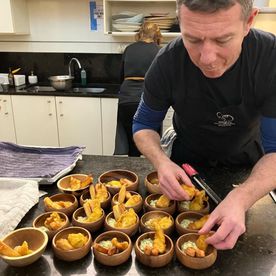
And what better way to celebrate than with food that gives your evening its own character rather than borrowing one from a delivery app? Most matches Irish viewers will watch kick off between 8pm and midnight. It's an evening occasion, and the obvious move is to grab a takeaway. Ordering in solves the hunger but it doesn't give you a feast worth looking away from the TV, or food worth talking about when the second half starts.
The World Cup comes around once every four years and we believe the food should be worth the occasion.
Why One-Handed Food Is the Only Format That Works
Party food has one non-negotiable: it has to be one-handed. Attention is divided between the screen, the phone, and whoever's on the sofa. Nobody is sitting down to a full course meal. Anything that requires a fork, a balanced plate, or a table is already an annoyance rather than a treat.
A grazing table — finger food set out before kick-off — solves the hosting problem entirely. The food is there, accessible, and doesn't require managing, and everyone can watch the match.
What Food to Make for the World Cup
South American and Asian cuisines produce some of the most practical finger food on earth. Brazil, Japan, Argentina, South Korea - the nations with the most iconic street food traditions are also the ones you'll be watching this week.
Three DCS recipes to start you off — all one-handed, all prepped ahead:
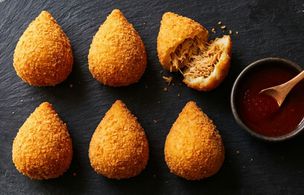
Brazilian Coxinha
Tear-dropped fried chicken parcels are a street food staple from the country that has won the World Cup more times than anyone else. DCS tutor Rafa's recipe is perfect for the occasion.
Make them in the morning and then fry them before kick-off.
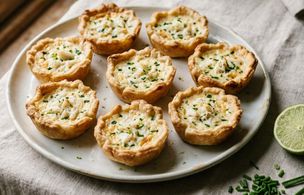
Crab Coconut Quiches
Mini puff pastry tarts with fresh crab, lime, and coconut cream. Eighteen from two sheets of shop-bought puff pastry, 20 minutes in the oven.
The coconut and lime cuts through the richer bites on the board and gives the your feast a lighter note.
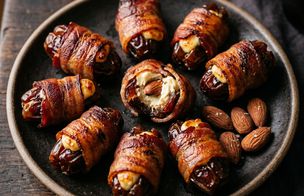
Bacon Wrapped Dates
10 minutes of prep and 15 minutes in the oven. Medjool dates, mascarpone, smoked almonds, halloumi, streaky bacon. Beautifully sticky, salty, and properly moreish.
Assemble up to 24 hours ahead and bake just before kick-off. They'll disappear faster than anything else on the table.
Hosting Tips To keep You out of the kitchen
during the match
Two things to keep you out of the kitchen and in front of the TV:
First: Finish all dishes before kick-off. Empanadas, meatballs, and yakitori all hold well at room temperature or in a warm oven. Sushi is made and covered an hour ahead. If everything is ready before the players walk out, the kitchen stays quiet for the night.
Second: Set up the feast somewhere people can reach it without moving much. A coffee table, kitchen island, or sideboard. Grazing food distributes itself. You set it out once and it keeps everyone happy for 90 minutes.
Make sure there's lot of ice to keep beers cool and think about buying a stainless steel ice tub to put it in, it'll free up your fridge.
Want to go further?
The three recipes above are the starting point and the classes below cover a wider menu for the football mob descending on your house.
Dive into contemporary and fun menus before viewing lively demonstration, leading into a hands-on session where you will get involved in some of what's on the menu. Held within Dublin Cookery School's state-of-the-art kitchen facilities and supported by a team of enthusiastic tutors, you're supported every step of the way.
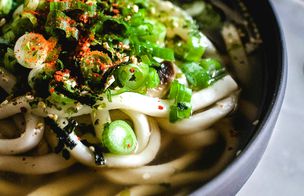
JAPANESE FUSION FEAST
Like a little informal Japanese-style snack bar, the class opens at the izakaya, moves to the sushi bar, and ends at the dining room for delicious food.
This is the class if you want to come away knowing how to make fun sushi, irresistible snacks, and a steaming bowl of umami braised pork & noodles.
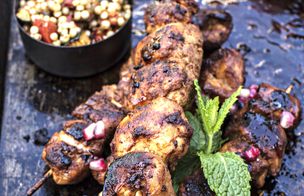
WORLD STREET FOOD
This is the cooking behind the food you crave: char and smoke you can get going indoors, the sauces and pickles that balance the heat, and dishes built to be eaten standing up with one eye on the match.
The technique you learn on this course will outlast the final!
Frequently Asked Questions
- What great food can I make for the World Cup?
- The best food for a World Cup watch party is finger food you can eat one-handed while the match is on. Good starting points are Brazilian Coxinha (fried chicken parcels), Crab & Lime Quiches with Coconut Cream (mini puff pastry tarts), and Bacon-Wrapped Dates with Halloumi — you'll find full recipes for all three on the Dublin Cookery School website. Check out Dublin Cookery School's World Street Food course (€95, 6th July 2026) and Japanese Fusion Night (€95, 23rd June 2026) in Blackrock. All levels welcome.
- What are easy finger food recipes for a World Cup house party?
- The most practical house party finger food is made ahead and requires no management once the match starts. Reliable options: empanadas (filled and baked earlier in the day, kept warm), meatballs with dipping sauce (can be made the day before and reheated), yakitori skewers (marinate and grill before kick-off), sushi rolls (assemble up to an hour ahead and cover). Check out Dublin Cookery School's World Street Food course (€95, 6th July 2026) and Japanese Fusion Night (€95, 23rd June 2026) in Blackrock. All levels welcome.
- What are hosting tips for a World Cup watch party?
- Finish cooking before kick-off. Finger food formats — empanadas, meatballs, yakitori skewers, sushi rolls — all hold well at room temperature or in a low oven, so the kitchen can be clear before the match starts. Set the feast out where guests can reach it without sitting down: a coffee table, kitchen island, or sideboard board works perfectly. Opt for foods that don't require plates or cutlery. Cold beer alongside the izakaya-style bites; something lighter with the sushi - anything goes!
- Where is Dublin Cookery School?
- Dublin Cookery School is at 2 Brookfield Terrace, Blackrock, Co. Dublin, A94 C9Y5 — 20 minutes from the city centre by DART or bus. Evening classes start at 19:00. Contact: info@dublincookeryschool.ie or 01 210 0555.