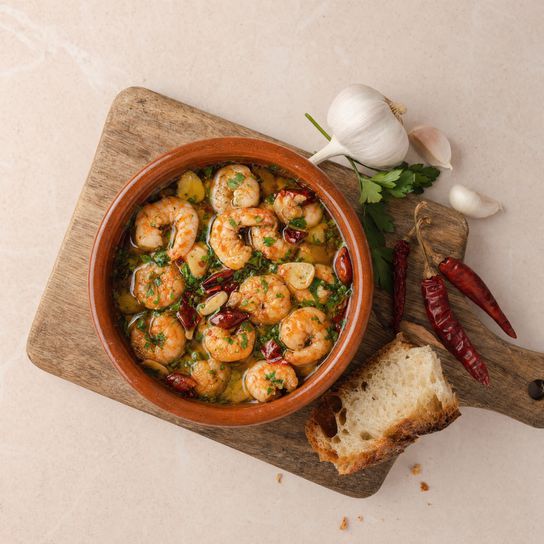
Prawns Pil Pil
Gambas al pil pil is the tapa that makes a table go quiet for a second, then reach for the bread. Prawns cooked in warm olive oil with garlic and dried chilli, brought to the table still bubbling in the dish.
The name is the sound the oil makes — pil, pil, pil — and the whole recipe comes together in about twenty minutes with a handful of ingredients. There is almost nothing to hide behind here, which is exactly why it rewards a little care. Good prawns, patient garlic, olive oil you'd happily taste on its own. Get those three right and the rest looks after itself.
To prepare the Prawns Pil Pil
- Step 1: Prepare the Prawns
- Pat the prawns dry with kitchen paper and season with a little salt and pimentón. A wet prawn steams instead of searing, so it never takes on any colour, and water hitting hot oil makes it spit. Pat them until the surface feels dry to the touch.
- Step 2: Cook the Prawns
- Bring a large frying pan to high heat. Add a good drizzle of olive oil and sauté the prawns on both sides. The hot pan is deliberate: you want them to colour fast, before the inside overcooks and turns rubbery.
- Step 3: Add the Garlic
- Reduce the heat and add the finely sliced garlic and dried red chilli, frying gently until the garlic is a pale golden colour. Drop the heat first — garlic scorches and goes bitter at searing temperature, but on a gentler heat it softens to gold and sweetens, and that sweet garlic oil is the base of the dish.
- Step 4: Reduce with Wine
- Add the white wine and allow it to bubble away for a minute or two to reduce and for the alcohol to evaporate. The wine lifts the toasted pimentón and garlic off the base of the pan, and its acidity cuts through the oil so the dish isn't heavy.
- Step 5: Finish & Serve
- Remove from the heat and sprinkle with the freshly chopped parsley. Prawns keep cooking in the residual heat of the oil, so the gap between pan and plate should be short. Serve immediately, still sizzling, ideally in a brown terracotta dish if you happen to have one!
Ingredients
8 large prawns, peeled & without heads
¼ tsp hot pimentón
3 large garlic cloves, finely sliced
1 small whole dried red chilli
2 tbsp white wine
Chopped fresh flat-leaf parsley, to garnish
Salt, to taste
Extra virgin olive oil, to cook
Learn visually? Check out our YouTube page where José shows us how to get this on the plate in under 20 minutes.
A few notes from the kitchen
The prawns. Raw and a good size are what you're after. Frozen prawns are grand — thaw them fully and pat them really dry, because any water will cool the oil and you'll lose the sizzle. Shell-on prawns give more flavour if you don't mind the mess. Rubbing rather than sprinkling seasons the surface evenly and presses the pimentón against the prawn, so it toasts into the flesh and blooms into the oil the moment it hits the pan, instead of sitting on top raw.
The garlic. Slice it thinly so it perfumes the oil without catching. The temptation is to rush it on a high heat; resist. The oil should barely tremble while the garlic softens.
The oil. It isn't a cooking medium here, it's half the dish. Use an quality extra virgin olive oil and use enough so that there's a proper pool to spoon over each prawn.
The dish. A terracotta cazuela holds the heat and carries it to the table still bubbling, which is the whole theatre of pil pil. Any small heavy pan does the job if you don't have one.
The bread. Fresh crusty bread is non-negotiable — the garlicky oil is as good as the prawns. A chilled glass of Albariño or a dry fino sherry sits behind it beautifully. Pil pil rarely travels alone, so build it into a wider tapas feast: a tortilla, some pan tumaca, a bowl of olives.
The shop. If you’re looking to add Spanish tools and ingredients to your regular kitchen rotation at home, visit A Taste of Spain on Camden Street or Capel Street, or check out Mercaolé supermarket on Bishop Street (or their online shop) which specialises in Spanish and Latin American ingredients.
Where pil pil comes from
Pil pil began in the Basque Country as a cod dish, bacalao al pil pil, where the gelatine in the fish emulsifies with olive oil into a glossy sauce, worked by hand with the pan off the heat. The prawn version travelled out from there and dropped the hard part: there's no emulsion to coax, just prawns, garlic, chilli and good oil. The name stuck because the sound didn't change — that soft pil, pil of oil moving in a hot dish.
Worth knowing: you'll see this dish called gambas al ajillo too. Ajillo means 'with garlic'; pil pil takes its name from the sizzle and leans harder on the chilli.
Frequently asked questions
- What does "pil pil" mean?
- Pil pil is the sound the olive oil makes as it bubbles around the prawns — pil, pil. The name comes from the Basque Country, where the original pil pil is made with salt cod and an emulsified oil sauce. The prawn version, gambas al pil pil, is the sizzling garlic-and-chilli tapa served all over Spain and taught in our Spanish Tapas & Paella class at Dublin Cookery School.
- What prawns should I use for prawns pil pil?
- Use raw, peeled prawns, and choose a good size — large or king prawns hold their bite. Frozen prawns work perfectly well: thaw them fully and pat them dry with kitchen paper first, because water cools the oil and stops the sizzle. Shell-on prawns give a deeper flavour if you don't mind peeling them at the table.
- Can I make prawns pil pil without a cazuela?
- Yes. A traditional terracotta cazuela holds the heat and lets you carry the dish to the table still bubbling, which is part of the appeal. Any small, heavy-based frying pan or a small ovenproof dish will cook it just as well. The dish matters less than the heat: keep a gentle heat while the garlic infuses, then bring it up for the prawns.
- What do you serve with prawns pil pil?
- Fresh crusty bread first — the garlic-and-chilli oil is half the reason to make it. A chilled dry white such as Albariño, or a fino sherry, works beautifully alongside. Pil pil is a tapa, so it's at its best as part of a selection of small dishes: a Spanish tortilla, pan tumaca, mussels or olives turn it into a full table. Equally it can make the perfect brunch or light evening meal on it's own.
- Where can I learn to make prawns pil pil?
- Prawns pil pil is one of the dishes featured on the menu at our Spanish Tapas & Paella evening course in Blackrock, from €95, with Chef José Gomez. The class suits all level from first-timers to confident cooks, and is hands-on.
- Can I make prawns pil pil ahead of time?
- No — pil pil is a last-minute dish and it's best straight from the pan. The prawns keep cooking in the residual heat of the oil, so if it sits, they toughen. Have everything ready before you start: the prawns rubbed with the pimentón and salt, the garlic and chilli sliced. Then cook it in the few minutes before you want to eat and bring it to the table sizzling.
- What's the difference between gambas al pil pil and gambas al ajillo?
- They're close cousins. Gambas al ajillo means garlic prawns plainly — prawns cooked in olive oil with plenty of garlic. Gambas al pil pil takes its name from the sizzle of the oil and leans harder on dried chilli for heat, with a pinch of pimentón. In a lot of kitchens the two names cover more or less the same plate; the pil pil version is the one with the chilli kick.
Join us at our cookery school to learn how to cook similar dishes
- Spanish Tapas & Paella with Chef José Gomez: Original Evening Course
- Spanish Tapas & Paella with Chef José Gomez: Explore More! Evening Course
Give a gift
Our gift vouchers are the perfect present for any food lover
Buy a voucher