An Ounce of Knowledge Means You're Not Playing With Fire
8th May 2026

Why barbecues go wrong
and what a good BBQ class in Dublin will fix.
Every summer, the same ritual plays out across gardens and parks on the island. The coals go on. The drinks come out. Someone confidently declares the meat is done.
It isn't.
A survey of 1,052 adults across Ireland found that fewer than 2% were following all the food safety checks necessary to ensure barbecued meat was cooked correctly. Not a small gap. Near-total non-compliance, across the island, every summer. The Food Safety Authority of Ireland consistently names undercooked meat as one of the leading causes of food-borne illness — and yet the barbecue remains the one cooking format where people feel least inclined to apply any of the basics they already know from the kitchen.
The grill looks approachable. The format feels casual. Nobody wants to be the person with a meat thermometer at a garden party. Confidence fills the gap where knowledge should be, and for most people it holds up fine — until the one time it doesn't, and the consequences are sitting on someone's plate.
Here are the five mistakes that account for most of what goes wrong.
Five Mistakes on the bbq
- MISTAKE 1: COOKING EVERYTHING OVER DIRECT HEAT
-
This is the one that causes the most damage and the one almost nobody knows they're making.
Direct heat — cooking food directly over the coals or flame — is fast, high-temperature, and unforgiving on anything that needs time to cook through. A thin burger patty can handle it. A chicken thigh cannot. The result is familiar even if the cause isn't: meat that's charred on the outside and raw at the bone.
The surface hits the heat and closes over before the interior has had a chance to cook. More time over the flame burns the outside further without solving anything in the middle. The fix involves understanding heat zones — using different areas of the grill for different stages of cooking. - MISTAKE 2: PUTTING COLD MEAT STRAIGHT ON THE GRILL
-
Meat taken directly from the fridge onto a hot grill behaves differently from meat that has had time to come to temperature. The cold interior resists heat, the exterior cooks faster than it should, and the result is uneven cooking throughout — the exact conditions that create food safety problems.
Cold, damp surface moisture from refrigeration inhibits the high-heat searing that build crust and flavour. Patting meat dry and allowing the surface to equalise before cooking makes a measurable difference to what comes off the grill: the crust forms faster, the surface doesn't steam, allowing the heat to do its job. - MISTAKE 3: MOVING FOOD TOO EARLY, OR TOO OFTEN
-
The instinct on a grill is to keep things moving. It feels like control — the tongs in hand, the constant checking, the half-turn every thirty seconds. It isn't control. Meat releases from a hot grate naturally when it's ready to be turned. Trying to move it before that point tears the surface, pulls away the crust you're building, and leaves half the meat stuck to the bars.
With fish this is the difference between a fillet that comes off clean and one that falls to pieces. The cook who puts something down and steps back — who trusts the heat rather than managing it by feel — produces food that looks and tastes like it was cooked deliberately - MISTAKE 4: SKIPPING THE REST
-
Nothing appears to be happening when meat is resting. That's why the step gets skipped. In practice, resting allows the muscle fibres to reabsorb the juices that heat forces toward the centre during cooking. Cut into meat straight off the grill and those juices run out onto the board, leaving the meat drier than it should be. Wait, and they stay where they belong.
The resting time varies by cut and thickness, and most people either skip it or stop far short of what the meat actually needs. It's invisible effort with visible results, which makes it one of the more counterintuitive habits to build without being shown it. - MISTAKE 5: TREATING SEAFOOD LIKE MEAT
-
Seafood on the grill is where confidence tends to collapse, which is why most people avoid it. Prawns overcook in under a minute at high heat. Whole fish needs a clean, well-oiled grate and an understanding of when the flesh will release without tearing. Mussels and shellfish behave differently again — the grill is doing something specific to each of them, and applying the same logic you'd use on a chicken breast produces the kind of result that puts people off trying a second time.
The variables are real, but they're learnable. Once the rules make sense, a seafood BBQ becomes one of the most straightforward things you can cook outdoors. The avoidance is about unfamiliarity, not difficulty.
Cold, damp surface moisture from refrigeration inhibits the high-heat searing that builds crust and flavour. Patting meat dry and allowing the surface to equalise before cooking makes a measurable difference to what comes off the grill — the crust forms faster, the surface doesn't steam, and the heat does the job it's supposed to do.
What a BBQ Class Fixes
Understanding why these mistakes happen is one thing. Correcting them under pressure, at a live fire, with food on the grill, is something else. That's what a hands-on BBQ cooking class in Dublin gives you — the practice with someone beside you who can see what you're doing and tell you why it's going wrong in real time.
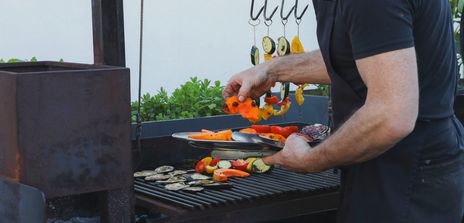
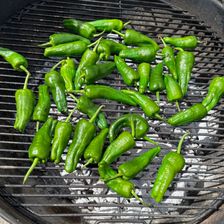
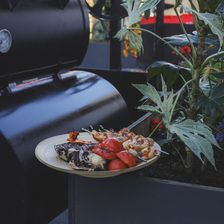
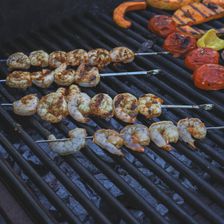
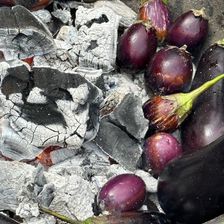
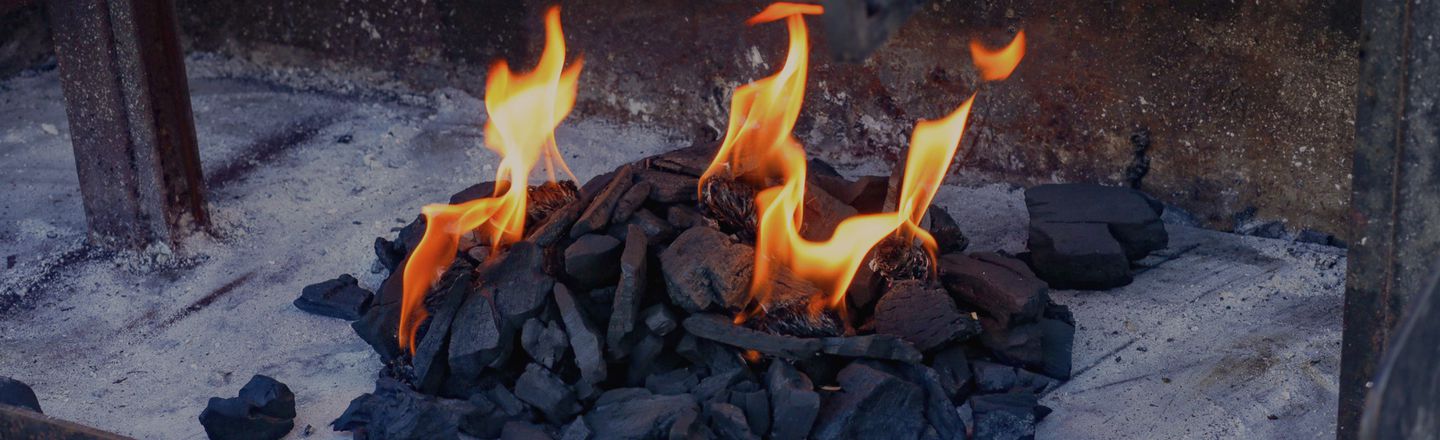
At Dublin Cookery School, the BBQ cooking classes start with fire. How to build it, how to read it, how to move food between heat zones with purpose. From there: internal temperatures, resting times, marinades that hold up to high heat, and the specific handling that makes seafood on a grill worth attempting. You leave with a method, not a collection of recipes.
Small groups, hands-on, in the garden at our school in Blackrock — just south of Dublin city, on the DART line.
Who Is This For?
Two types of people tend to book a summer BBQ class in Dublin.
- The first is a home cook who already handles a kitchen well — can roast a bird, build a sauce, work a fish fillet. The grill is different territory. The variables are less controlled, the timing less predictable, and the gaps in knowledge are harder to paper over when you're cooking over live fire. For this cook, the class is about depth. Understanding smoke, learning the cuts that reward low-and-slow treatment. Getting into the specifics of American BBQ techniques is its own discipline — the kind of thing that takes an afternoon to begin understanding and a season to get comfortable with. The Australian BBQ seafood-focused menu is similar — most people avoid it not because it's beyond them, but because nobody ever showed them where to start.
- The second is the nervous newcomer: someone who genuinely wants to get it right but doesn't know where to start. Open flame cooking can feel like a lot — not knowing whether the meat is done is a specific kind of stress when you're dealing with maintaining a fire. A structured hands-on class with us removes that uncertainty for good.
Both are the right person for a barbecue class in Dublin.
BBQ Courses at Dublin Cookery School
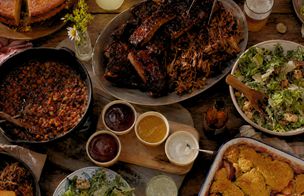
SUMMER BBQ: AMERICA
Low and Slow with Sauces
On this session, we'll be sure to review the benefits of going low and slow, take a dive into off-set smoking, show you how to fill the table with tempting game-day sides, and then help you find your favourite American BBQ sauce style. Are you a Kansas City Red or a glistening, Carolina Gold? Join us to find out!
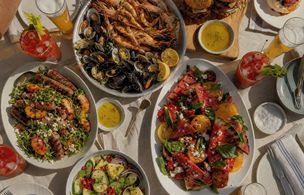
SUMMER BBQ: AUSTRALIA
Sweet Shellfish & Sunshine
On this session, we'll zero in on how to best set yourself up when working with shellfish and ingredients that benefit from a more delicate touch or specific cookery techniques and tools. Wherever we go, be sure to make room for 'more' because we're bringing the freshest flavours to centre stage and dining on diamonds today.
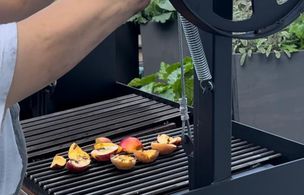
SUMMER BBQ: FEAST
Spark, Sizzle & Celebrate
The technical side of this session is all about sharing our tips and tricks to help you get the most out of your BBQ at home, no matter your set-up, no matter the season.
Turn on the music, and turn up the fire because company's coming!
SUMMER BBQ: PRACTICAL
Hands On Technical
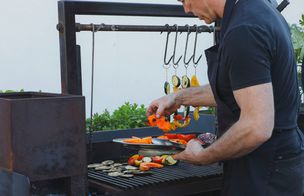
Find out how to get the best out of your BBQ and become a master fire starter. From lighting techniques and working off direct and indirect heat, to smoking methods, going low and slow, and knowing how and when to baste.
FREQUENTLY ASKED QUESTIONS
- What is included in a BBQ cooking class at Dublin Cookery School?
- Our BBQ cooking classes cover fire management, heat zones, technique for meat, seafood and vegetables on the grill, marinades and dry rubs, resting times, and the food safety knowledge that makes barbecuing reliable rather than guesswork. All classes are hands-on and run in small groups with an expert tutor.
- Is there a BBQ cooking class suitable for complete beginners in Dublin?
- Yes. Our summer BBQ classes work for people who are new to grilling as well as those who already cook regularly and want to develop their outdoor technique. No prior experience is required.
- How can I keep my teen safe in the kitchen?
- The most effective way to build kitchen safety habits in a teenager is through structured, supervised learning. At Dublin Cookery School, our teen programmes teach knife handling, heat management, and food safety as core parts of the cooking process — embedded in the doing rather than delivered as a separate briefing. Teens who learn in a professional teaching environment carry those habits home.
- What is the difference between an American BBQ class and a standard barbecue class?
- A standard barbecue class covers the core outdoor cooking techniques — direct heat grilling, managing a fire, cooking meat and seafood correctly. An American BBQ class goes into low-and-slow smoking, specific cuts like brisket and pork shoulder, and the use of dry rubs and smoke for flavour. Both are taught hands-on at Dublin Cookery School.
- Do you run a seafood BBQ class in Dublin?
- Yes. Our seafood BBQ class covers whole fish, shellfish, and other seafood on the grill — preparation, heat management, and the timing that separates overcooked from excellent.
- Where is Dublin Cookery School located?
- Dublin Cookery School is in Blackrock, just south of Dublin city centre, easily accessible by DART and public transport.
-
Lots of tips and skills
Learning new techniques and ideas made the day very worthwhile. I'm looking forward to making some nice dishes for family and friends to enjoy!!
Greg, Summer BBQ: Australia, 2025
-
A brilliant day, learned loads and will definitely be back!
Excellent and really enjoyable day, great chats and insights, learned loads and in particular about fire and temperature, but loads of little tips throughout the day.
Colin, Summer BBQ: Feast, 2025