What to Eat This Spring in Ireland — and How to Buy It Honestly
24th March 2026
The short answer: To eat sustainably in Ireland this spring, buy what's actually growing and swimming here right now.
That means new season lamb, Atlantic shellfish, purple sprouting broccoli, wild garlic if you can get it, and the first outdoor rhubarb.
It means reading the country of origin on the back of the pack — not the front. And it means knowing the difference between an Irish-sounding label and an Irish product.
The rest of this guide will walk you through both.

Spring is an honest season for Irish food. Sure there's some stuff you can pull from storage, and some things you can force to come a little earlier, but the best meals are those that come from what's at its best right now.
We put the question to two people who know this better than most: Scott Smullen, our resident fish monger, and Keith Grant, master butcher. Here's what they're buying — and what you should be too.
Fish in season
Scott has been sourcing fish for years, and his read on what to buy in spring is straightforward: follow the cold water.
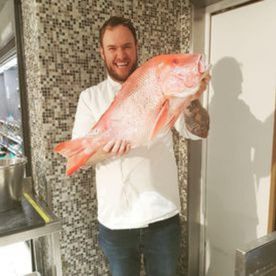
Monkfish is plentiful at this time of year, but it's worth understanding why it costs what it costs. We only use the tail and the cheeks — the rest of the fish is unusable at the table, which means a relatively small yield from a large fish. If you're seeing it at a price that seems too good, it's worth asking where it came from.
Hake is in good shape this time of year and forgiving to cook — it holds together better than people expect, takes a crust well, and is widely available from Irish waters.
Lemon sole is one of the best fish in the pan right now. Thin, delicate, and quick to cook. Don't overthink it - butter, lemon, and a minute on each side.
Haddock is reliable and versatile — it smokes beautifully, handles a batter without falling apart, and is consistently available from sustainable Irish and North Atlantic stocks.
Shellfish: the reason mussels, clams, and oysters are at their best right now is simple; the water is still cold. Shellfish feed on microscopic algae, and cold, clean Atlantic water produces the cleanest-tasting shellfish of the year. Scotty recommends Gigas oysters from Galway specifically — farmed in the bay, they're plump, briny, and as good as oysters get in this country.
We'll be covering sustainable seafood sourcing in more depth in a follow-up piece — we'll link here when it's live.
Meat in Season
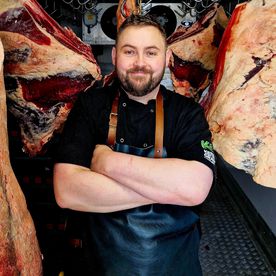
Keith Grant, master butcher, doesn't hedge on this one. Spring has one winner, and it's lamb.
New season Irish lamb is at its peak right now. Young animals out on fresh spring grass, growing quickly in the mild conditions and the meat is sweet, tender, and genuinely different from what you'll buy in autumn or winter. Ireland produces some of the best lamb in the world. That's not sentiment, it's geography: the grass-growing climate here is unusually kind, and the animals show it in the quality of their meat.
If you buy one piece of meat this spring, this is it. Ask your butcher for new season — the distinction matters.
Produce in Season
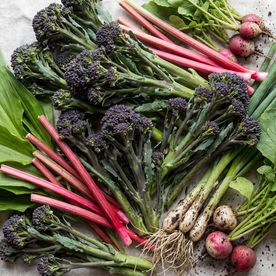
Its always a good shout to check out the Bord Bia in season calendar, but here's a quick look at what to look for right now.
Just arriving: Wild garlic is pushing up in hedgerows and at woodland edges — thin, beautifully pungent, and briefly available. Use the leaves in butter, in sauces, blitzed into a pesto, folded through pasta, or even in soups.
Spring onions are coming from early outdoor sowings.
The first cuts of outdoor spinach and watercress are here. Sorrel and baby radishes from polytunnels, and the first thin stalks of outdoor rhubarb, are appearing on better market stalls.
In full season: Purple sprouting broccoli is at its absolute peak — this is one of the most underrated vegetables grown in Ireland, and March is its month. Don't blanch it to death. A hot pan with olive oil and a little garlic is enough.
Kale, savoy, green cabbage, leeks, celeriac, and cauliflower are all solid and available. Forced pink rhubarb is in full production indoors and is better right now than it will be once the outdoor stalks take over. Velvet shank and oyster mushrooms are worth seeking out.
Heading out: Parsnips are now past their best — the quality declines sharply once the heavy frosts are gone. Swede and turnip are the same. Chicory and endive are at the tail end so eat them now or wait until next winter.
Shopping Sustainably
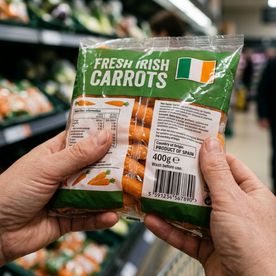
There is a problem with buying Irish food in Ireland, and it has a name now: farmwashing.
Retailers are marketing produce under brand names that look and read like Irish farms — with farmer imagery, pastoral font choices, and green packaging — while the country of origin appears in significantly smaller text on the back or side of the pack.
At a Dáil committee meeting in February 2026, SuperValu's Irish Herbs Thai Style Curry Mix was raised as a specific case — the packaging featured an image of an Irish farmer and appeared to carry the Bord Bia Quality Mark, while the country of origin was listed as Kenya/Spain.
The product was removed from shelves and was described as a labelling error. But it reinforces the need to check the labels ourselves before purchasing.
Mick Kelly of GIY has been one of the most consistent voices highlighting this problem — and he's demonstrated something highly useful: a single social media post calling out a retailer has, in recent cases, pulled a product from shelves faster than formal regulatory action. The FSAI undertook over 7,000 labelling checks in retail in 2025, but public pressure has proven a more immediate lever. If you find something that doesn't add up, report it at fsai.ie and say it out loud.
PRactical Shopping Tips
- Check the Label
- The front of the pack is marketing. The back is information. Ignore farmer imagery, Irish-sounding names, and green field photography — none of it is regulated in the same way as country of origin. Country of origin is a legal requirement on all fresh fruit and vegetables, meat, fish, eggs, and honey. It will be on there. Look for it.
- Check for the Bord Bia Quality Mark
- The Bord Bia Quality Mark is your most reliable signal on red meat, poultry, eggs, and fruit and vegetables — it means Irish origin has been independently audited. The caveat: the SuperValu herbs case showed the mark can appear on non-Irish produce. Bord Bia investigated and the product was recalled, but it did reach shelves first.
- Cross Reference the Shelf Label
- The shelf label and the product packaging are not the same thing. Several of the cases raised at the Dáil committee involved shelf labels indicating Irish origin while the product packaging said something different. The packaging carries more legal weight.
- Check its in season
- If it isn't in season here, it isn't Irish. Irish tomatoes in January. Irish strawberries in November. Question it. Cross-referencing the season is a practical filter that costs nothing.
- Where is it sold?
- The shortest supply chain is the most transparent one. Farmers' markets, farm shops, or direct from growers: no packaging intermediary, no opportunity for misleading labelling, and you can ask the question directly.
Learn to cook what's in season
Our spring classes cover fish, shellfish, and hands-on techniques with the ingredients that are actually available right now.
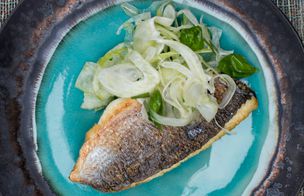
Fish & Shellfish Workshop
A NEW one-day course ideal for passionate home cooks looking to get more confident with seafood.
Find out more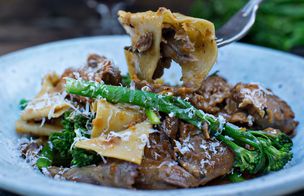
Friday Night Supper Club
One Friday Night a month we get together to enjoy a new seasonal menu, good food and even better company
Find out moreFrequently Asked Questions
- How do you eat and shop sustainably in Ireland in spring?
- Buy what is genuinely in season in Ireland right now: new season lamb, Atlantic shellfish (mussels, clams, Galway oysters), hake, lemon sole, purple sprouting broccoli, wild garlic, kale, and forced rhubarb. Ignore the front of food packaging entirely — check the country of origin, which is legally required and always present, usually in smaller print. Use the Bord Bia Quality Mark as your most reliable guide on meat, eggs, and produce. Shop at farmers' markets or direct from growers where possible.
- What fish is in season in Ireland in spring?
- Monkfish, john dory, lemon sole, and haddock are all in good supply. Shellfish — particularly mussels, clams, and Gigas oysters from Galway — are at their best in spring because the water is still cold, producing clean, firm shellfish.
- What is farmwashing in Irish supermarkets?
- Farmwashing refers to the practice of marketing produce under Irish-looking brand names and imagery while the actual country of origin — listed in smaller print — is somewhere else entirely. Cases raised at a Dáil committee in February 2026 included tomatoes, herbs, broccoli, and carrots, where front-of-pack branding suggested Irish origin while the legal country of origin declaration named Spain, Kenya, or Scotland. The FSAI handles formal complaints at fsai.ie.
- What is the best meat to buy in Ireland in spring?
- New season Irish lamb. It is widely considered to be at its annual peak in spring when young animals are feeding on fresh grass. Keith Grant, master butcher, recommends asking specifically for new season lamb from your butcher rather than buying pre-packaged.
- What vegetables are in season in Ireland in March?
- Purple sprouting broccoli is at its peak. Also in full season: kale, brussels sprouts, savoy cabbage, leeks, beetroot, celeriac, carrots, cauliflower, forced rhubarb, round lettuce, oyster and velvet shank mushrooms, wild garlic. Just coming in: wild garlic, spring onions, spinach, watercress, sorrel, and radishes from early polytunnel sowings.