Ireland Has 18 Michelin Stars. Why Is the Tomato in Your Trolley Dutch?
25th June 2026
Irish food is having a moment. This February, the Michelin guide held its awards ceremony in Dublin for the first time. The Republic now has 18 one-star and 5 two-star restaurants. Then you reach the supermarket and the tomatoes are from the Netherlands and very little fruit and vegetables on offer are nationally produced.
We have plenty of pride in Irish food but our trolley doesn't always match. June 27th was MSME Day, the United Nations day for Micro, Small and Medium Enterprises. In plain terms, that means most of the local butchers, fishmongers, grocers, and farm shops you actually buy from. And that got us thinking:
How can you support local food suppliers without breaking the bank?
The short version: buy whole ingredients, waste less of them, and learn enough in the kitchen to make a smaller, better shop go further. Buying Irish isn't only about paying more for a label.

The pride is real & So is the price gap.
Irish-grown and Irish-reared produce from local businesses can cost more than the imported version beside it, and in a tight money-month that difference is enough to move a hand from one option to the other. Irish food pride can be loud online and quiet at the till.
The price tag isn't the whole story, though. A whole chicken costs less per kilo than the same bird sold as fillets, and it can give you a second meal and a pot of delicious stock. A side of fish from someone who can tell you what landed that morning beats a shrink-wrapped tray flown in days ago.
The saving comes from buying less, using all of it, and cooking it well enough that none of it ends up in the bin.
How to support local food suppliers without breaking the bank.
Shop the edges of the supermarket: the local butcher, the fishmonger, the market stall, and the small producers you'll find at food fairs and farmers’ markets. They sell whole ingredients rather than assembled convenience, and whole ingredients work out cheaper per portion once you know what to do with them.
A few habits keep local food costs down:
- Buy the cuts nobody asks for. A butcher will sell you flat-iron or picanha beef for a fraction of the price of fillet, and will tell you how to cook them.
- Ask the fishmonger what's plentiful. Whatever was landed in quantity — mackerel, pollock, whiting — is fresher and cheaper than the cod or salmon everyone reaches for - and more sustainable too.
- Shop vegetables in season. Irish veg costs less at its peak, so build the week around what's cheap rather than paying over the odds for what's not.
- Cook from scratch and use the lot - this kind of meal usually undercuts the chilled ready version, and bones, trimmings and leftovers stretch one shop across several meals.
That's whole-food cooking. It's what turns "buy more Irish" from a good intention into practical use.
If you want to taste how close to home this gets, Dún Laoghaire-Rathdown has just launched a Coastal Food Trail of food spots you can reach by DART. The school sits on that map, roughly 20 minutes from the city centre.
It starts in the veg aisle.
The cheapest way to eat local is the veg aisle, where a bag of in-season Irish vegetables costs less than almost anything else in the shop and travels the shortest distance to your plate.
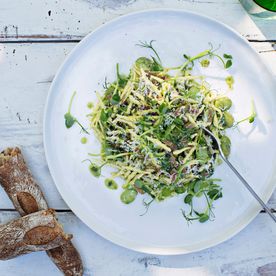
Modern Vegetarian: Original
€190 | 09:30–15:00 | 19 Sep 2026
This is the day the vegetable gets top billing, from Cauliflower & Cumin Fritters with Lime Raita to an Aubergine & Puy Lentil Moussaka, just a couple of many ideas explored in this one day course. You'll leave able to create dishes where vegetables are the star of the show and it's recommended for vegetarians and committed carnivores alike.
Meat worth the money
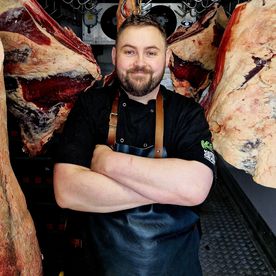
With master butcher Keith Grant
When a class is about meat, it starts with the cut, and that's Keith Grant's world. Keith is the master butcher who opens our Steak, Sauces & Sides nights talking all things butchery. What's his recommendation for a value cut of beef?
"My recommendation for a cut not a lot of people know about also happens to be my favourite cut on the whole animal, and that is beef short ribs. If you like rib-eye steak, you will adore short ribs. You just cook them low and slow, similar to a lamb shank."
The two classes below run on the one idea: better quality meat, good technique, less waste.
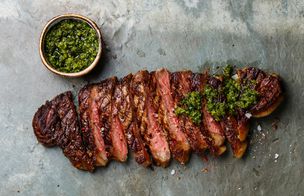
Steaks, Sauces & Sides
€105 | 19:00–22:00
25 Aug, 18 Sep 2026
The night begins at Keith's counter, comparing the popular steaks with the lesser-known gemstone cuts: flat-iron, picanha, fillet and t-bone. Then it's the sear, the butter-baste, and the sauces and sides worth talking about, including bordelaise, béarnaise, a charred chimichurri, and cauli-ditali gratin. Finish the evening in the dining room with a wonderful meal and a glass of wine. The 14th July date is full, next availability is from 25th August.
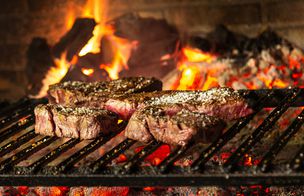
Summer BBQ: Feast
€195 | 10:00–16:00
8 Aug 2026
Good meat matters just as much over open fire. Our annual Summer BBQ Feast is one of our favourite days of the year and 8th August is the last Feast of the year. Some of the many nostalgic flavours featured are a Sunday Roast Cooked on the Grill, Blistered Melon & Pears with Prosciutto, Charred Leek Gazpacho, and a Sponge Roulade with Warm Berries. You'll learn how to get the best from your barbecue at home whatever your set-up.
Fish without the fear
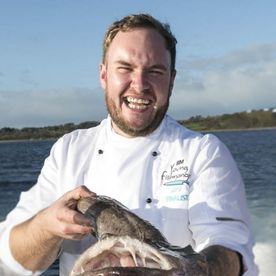
With Fishmonger Scott Smullen
Great fish is set before it reaches the pan, by the person who sells it to you. Scott Smullen is the fishmonger behind our seafood days. He brings the catch and the insider knowledge no label carries: what's in season, what to ask for, and how to tell a fresh fish from a tired one. Students remember him by name, and he's hands-on in the one day Fish & Shellfish Workshop.
"The addition of Scotty the fishmonger was excellent, with insider knowledge and infectious enthusiasm" wrote Colm in April about his experience at our Fish & Shellfish workshop.
So what does Scott recommend this summer?
"My personal favourite is wild Irish brill. It's a beautiful flatfish — pan-fry it simply, with butter, olive oil, salt and pepper. Or braise it if you're doing a family meal."
Looking to get hands-on experience and expert advice from Scott before you get adventurous at home? Grab a spot at one of our fish-focused classes:
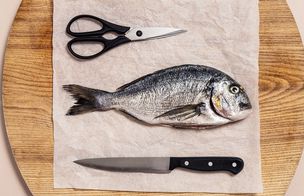
Sensational Seafood
€95 | 19:00–21:30
7 Jul 2026
You'll learn to judge freshness, how to store and handle seafood, and how to cook it a few contrasting ways: example dishes include Pan-Fried Fish with Butterbean Tabbouleh, Seared Scallops with Orange & Charred Sweetheart Cabbage, and Salmon with White Wine, Dill & Cream.
This is the last course date of the year.
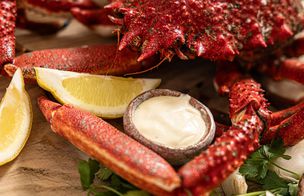
Fish & Shellfish Workshop
€190 | 09:30–15:00
3 Oct 2026
A full day for seafood lovers who want to get really confident at the fish counter. We'll look at seasonality and quality, you'll shuck oysters, learn to cook gambas a la plancha, work through fresh mussels, clams & crab, and fillet flat and round fish off the bone.
From a Shellfish Pot with Samphire to Trout with Fennel, Orange & Watercress, these are just a couple of the dishes feature on the day.
Frequently asked questions
- How can I support local food suppliers without breaking the bank?
- Buy whole ingredients from the people who sell them: the butcher, the fishmonger, the greengrocer, and your local food market. A few good habits will help keep costs down. Choose the cuts nobody asks for at a butcher's (a flat-iron or picanha cut costs less than fillet), ask the fishmonger what's plentiful that day, and shop most of your vegetables in season. Try and use everything, from bones to trimmings. Cooking from scratch usually comes in less costly than the chilled ready version too. Dublin Cookery School's hands-on classes in Blackrock, Co Dublin from €95, teach exactly these skills, using small Irish suppliers like fishmonger Scott Smullen and master butcher Keith Grant.
- What is whole-food cooking?
- Whole-food cooking means starting with ingredients in their whole, unprocessed form — a whole fish, a side of beef, vegetables with the dirt still on them — rather than pre-portioned or ready-assembled products. It's usually cheaper per portion, it wastes less, and it tends to taste better because you control how it's cooked. It also makes shopping local easier, since small Irish suppliers tend to sell whole produce. Dublin Cookery School will give you the skills built around this approach, and caters for all level of cooks.
- Where is Dublin Cookery School, do I need experience, and can you cater for allergies?
- We're at 2 Brookfield Terrace, Blackrock, Co. Dublin, A94 C9Y5, about 20 minutes from the city centre by DART or bus, and are featured on the new DLR Coastal Food Trail. Classes suit all levels, with the minimum age to attend alone being 16. If you have a severe allergy, contact us before booking to ensure that the course you are considering is suitable.
- What are some of the classes you have coming up?
- Modern Vegetarian (€190, full day) builds its menu around a varied selection of vegetables and pulses. Our seafood classes, Sensational Seafood (€95, evening) and the Fish & Shellfish Workshop (€190, one day), are taught alongside fishmonger Scott Smullen and built around fresh Irish fish and shellfish. Steaks, Sauces & Sides (from €105, evening) opens at the counter with master butcher Keith Grant. The Summer BBQ Feast (€195, full day) is cooked on customised BBQ grills built by Wexford's Smokin' Soul. Each one turns buying great produce into a skill you'll use at home.
- Is eating 'local' cheaper than buying imported food?
- Item for item, not necessarily. Irish-grown and Irish-reared produce may carry a higher price than the imported version beside it. The cost works out differently once you account for waste and convenience. A whole chicken or a whole fish costs less per kilo than the pre-cut version and stretches across more than one meal, and a meal cooked from scratch usually costs less than its chilled ready-made equivalent. Supporting our Irish farmers is crucially important for their survival and our agricultural legacy.