Summer is Curry Season: Here's the Science to Prove It
13th May 2026
Every summer, people who could eat curry twice a week in winter stop making it entirely. The barbecue goes on, the spice rack goes untouched, and a cuisine that has been feeding people in the heat for thousands of years gets shelved until the weather turns cold again.
Kerala sits at around 28 degrees year-round. The belief of "curries are for cold-weather" doesn't stack up against that fact. They are the staple dish in tropical climates and there are good reasons why.
Understanding them changes how you cook from May through September.

Why Spicy Food and Hot Weather Go Together
The connection between hot climates and spicy food has been studied formally since the 1990s. The findings are worth knowing — not because the science adds intellectual credibility to eating curry in summer, but because they tell you something genuinely interesting about where the cuisine came from and why it works the way it does.
Reason 1: Heat Up To Cool Down
Capsaicin — the compound responsible for chilli heat — activates heat-sensing nerve receptors (TRPV1) in your mouth and throat. Your brain interprets this as a signal that your body is overheating and fires its cooling response: sweating, vasodilation, flushing. As that sweat evaporates from your skin, it pulls heat away from the body. The heat you feel from a good curry does not stack indefinitely. It peaks, triggers the cooling response, and passes. A cold beer alongside accelerates that considerably.
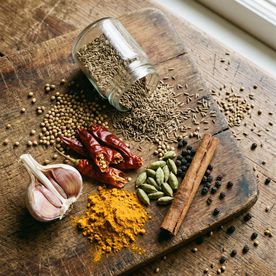
REASON 2: The antimicrobial argument
The spices that build a curry base are not just flavour. As well as garlic, onion and ginger, they can help inhibit food-spoilage bacteria.
In warm weather, we start eating outside. Dishes get passed around, things stay on the table. A curry base built on cumin, garlic, ginger, chilli and coriander is doing quiet work the whole time: the same compounds that give the dish its depth are actively inhibiting the bacteria that warm air encourages. It is not a reason to skip food hygiene. It is another reason to stop thinking of spiced food as a cold-weather indulgence.
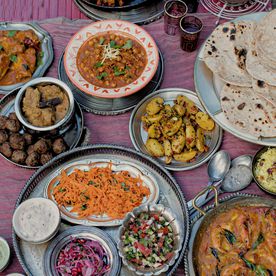
Reason 3: The Cooling Architecture of the Meal
One part of curry culture that most people in Ireland leave out is not the spice, it is what the spice is served with. Traditional Indian and South Asian cuisine does not plate spiced food in isolation. Raitas, sambals, and chutneys all earn their place.
Cool yoghurt is one of the oldest combinations in cooking, and it works every time. From marinades to an accompanying side - it cools the palate and softens the heat.
Coconut milk can temper the chilli while carrying the aromatics forward rather than flattening them.
Kachumber salad — fresh cucumber, tomato, lime — resets the mouth between bites. A cold beer after the meal clears the residual capsaicin from the palate completely.
What you serve alongside a curry can often be the star of the show - and one of the best things you can eat in the middle of summer.
What summer curries look like
The winter-curry association in Ireland was shaped by what arrived here first, richly spiced stews designed to warm you up. Think of the Anglo-Irish korma: cream-heavy and mild versus the Mughal dish it came from using ground almonds and yoghurt, not double cream. What arrived in Ireland was already an adaptation, made milder and richer for a market that was new to spice.
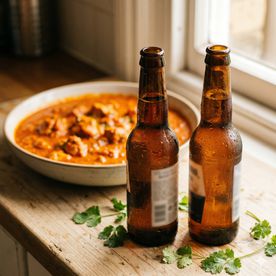
The Perfect Pairing
Cold beer works with curry for the same reason lime does — it's a palate-balance: the bitterness cuts through the spice and resets the palate between bites rather than letting the heat stack up. A lager keeps things clean. A pale ale, if the hops are right, sharpens the whole plate the way a squeeze of citrus does in the cooking.
If dairy is what you actually want for the heat — yoghurt in the raita is doing that job already.
Looking to make it at home? We have the perfect class for you.
Summer Curries & beer at DCS
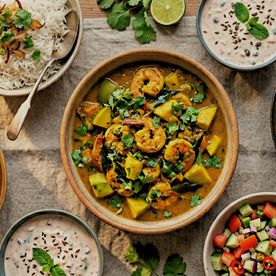
Our Summer Curries & Beer class is a must for any spice-lovers looking for a seasonal take on a favourite cuisine.
Three curries. Cooling sides. Chilled Beer. Interested? You will be when you see what's on the menu.
20th May | €95 | 7:00 - 9:30pm
Frequently Asked questions
- What are some tips for making summer curries?
- Use what is in season: ripe tomatoes, green chillies, fresh lime, coriander. Toast whole spices (cumin, coriander, cardamom) in a dry pan for two minutes before grinding — this step makes a more significant difference than any ingredient upgrade. Add chilli heat gradually and taste as you go rather than measuring. Serve with a raita (yoghurt, cucumber, carrot) and fragrant basmati or flatbreads. A prawn and green mango curry, a Kerala coconut fish curry, or a dry-spiced chicken with fresh herbs will take 40 to 50 minutes from start to plate. All of them are better eaten outside with a cold beer.
- Why do people eat spicy food in hot countries?
- Before refrigeration, cooking with garlic, cumin, chilli, and coriander in a warm climate was how food was kept safe. The spices that built the cuisine also kept the people who cooked it healthy. Sherman called it Darwinian Gastronomy. The food encoded the biology. There is also a secondary mechanism: capsaicin triggers sweating and vasodilation, which cools the body through evaporation. Hot-climate cuisines also pair spiced dishes with yoghurt, coconut milk, and fresh herbs — a deliberate cooling architecture built into the meal.
- What curry cookery courses do DCS offer?
- All of our classes are hands-on sessions where you cook dishes from start to finsih — building a spice base and working with whole and ground aromatics. Summer Curries & Beer is on 20th May 2026 from 7pm to 9:30pm at the cookery school in Blackrock, South Dublin. Classes cost €95 and are suitable for all levels. If this date doesn't suit, check out our regular Incredible India evening classes or our Indian Masterclass one day workshops.
- What beer goes with curry?
- A cold lager or pale ale. The carbonation matters more than the label — bubbles cut through capsaicin between bites and reset the heat, which is why the spice never builds the way it does when you drink water alongside a hot dish. A good pale ale adds hop bitterness that works against aromatic spices the same way lime does in the cooking: it sharpens the whole thing rather than competing with it. Avoid anything too sweet or too heavy — a porter or stout fights the spice rather than working with it. Temperature matters as much as style. Cold.